Hard water buildup in Gilbert
Valley water leaves calcium that bonds into grout and onto tile. Some of it comes off and some of it does not, and knowing the difference before you pay matters.
Calls answered 7am to 8pm · same-day service usually available
Text a photo of the worst area and we will tell you honestly what is achievable.
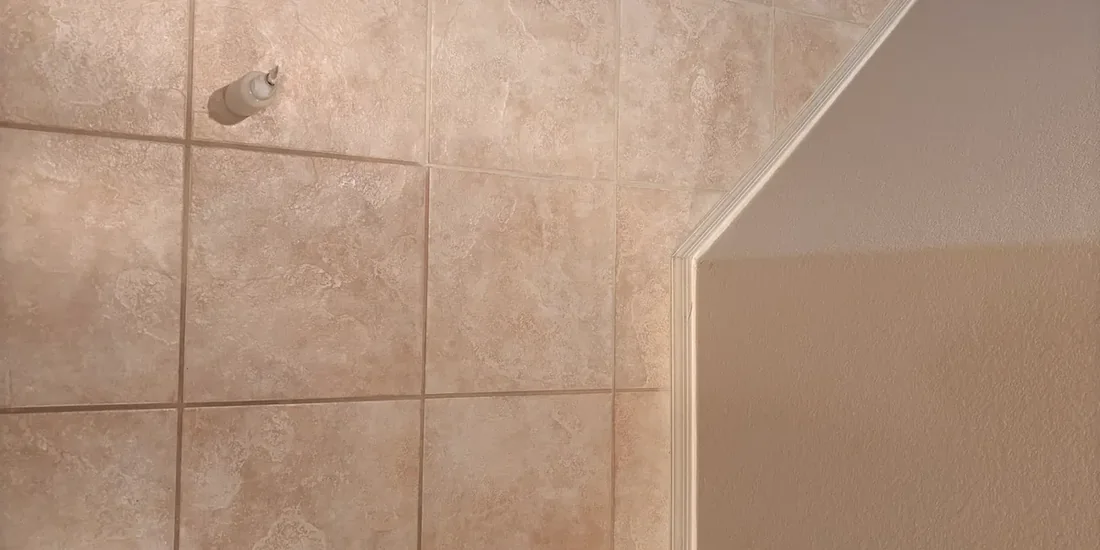
What the deposit actually is
Calcium and magnesium carried in the water supply. Water evaporates, mineral stays behind, and it does that every single time a surface gets wet and dries.
In a shower that is several times a day, every day, for years. It builds in layers, and each layer bonds to the one underneath and to the surface below it. On grout, which is porous, it goes into the material rather than sitting on it. On tile it forms a film that dulls the glaze.
The critical thing to understand is that it gets harder to remove the longer it sits. A year of deposit comes off readily. Ten years of deposit has become part of the surface.
What comes off
Light and moderate deposits respond well. Our process uses products matched to mineral rather than general soil, with dwell time and agitation, and on most bathrooms that takes off the majority of what is there.
The result on a shower that has never been professionally cleaned is usually substantial, and for plenty of homes that is the end of the job.
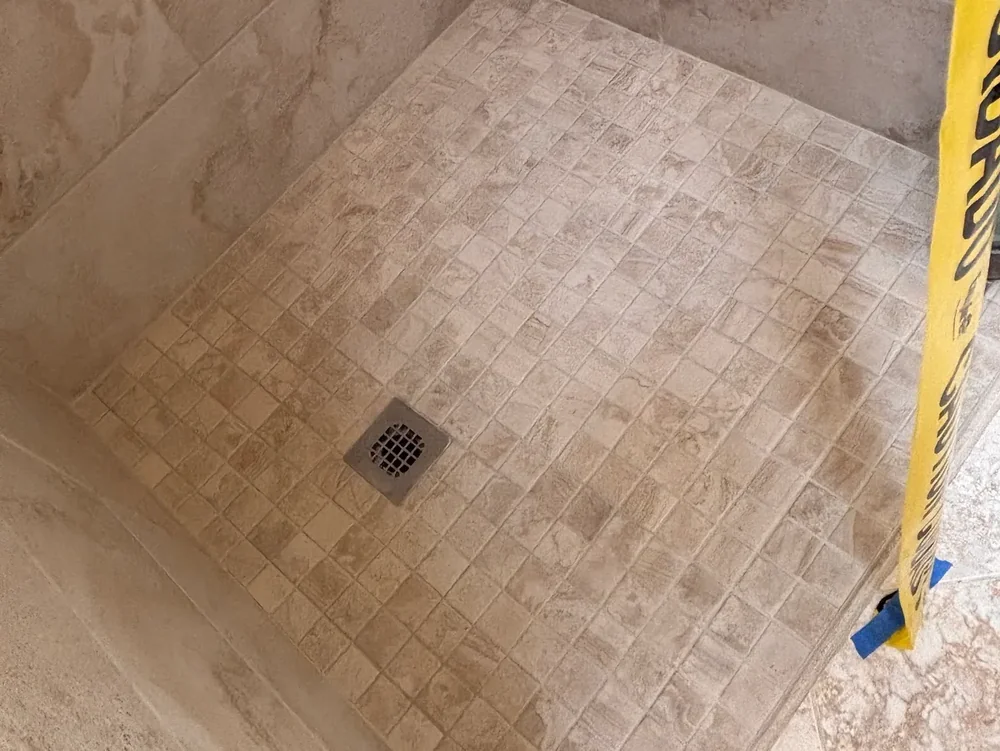
What does not
Being straight about this saves everybody disappointment.
Heavy buildup that has had years to bond does not fully come off. Not with our equipment and not with anybody else's, unless they are willing to damage your shower to do it.
There is also etching, which is different and frequently mistaken for deposit. Where mineral and cleaning chemicals have sat on a glazed surface long enough, they can eat into the glaze itself. The dullness is then in the tile rather than on it, and nothing removes it because there is nothing sitting there to remove.
We will tell you which you have. It is usually apparent within the first few minutes of working a test area.
What we will not do
This is where a lot of damage in this trade comes from, so it is worth being explicit.
We do not use harsh acids. They work, visibly and quickly, and they eat grout and etch tile while doing it. A shower cleaned that way looks excellent for a month and is permanently worse afterward.
We do not take blades or aggressive abrasives to your tile. Same reasoning. Scraping deposit off a glazed surface takes glaze with it, and the scratched area then attracts deposit faster than it did before.
We get out everything that will come out without doing harm, then tell you what is left and why.
If somebody quotes you a shower that will come out looking like new when yours has a decade of calcium in it, ask them what they are using. The answer is usually acid.
What it means for sealing
An important practical consequence and one people do not expect.
Sealer will not bond well over mineral that is still in the grout. If we cannot remove the deposit, we cannot give the sealer clean grout to adhere to, and the seal is far more likely to fail.
So a shower with significant hard water buildup is a harder candidate for color sealing, and we raise that before you commit rather than after it fails. The shower page covers the rest of what affects a seal, including the things nobody can see from the surface.
Slowing it down
- Squeegee the shower after use. Tedious, and by a distance the most effective thing available. Deposit forms as water evaporates, so removing the water removes the mechanism
- Wipe down tile around sinks where splashing dries
- A water softener stops new deposit forming, though it does not remove what is already there
- Sealed grout helps, because deposit sits on the coating rather than bonding into porous material
- Deal with it sooner rather than later, since a year of deposit is a completely different job from ten
On floors rather than showers
Hard water shows up on floors too, just differently. Mopping leaves mineral behind as the water dries, which is part of why a mopped floor can look cloudy and why the grout near a dishwasher or fridge line can be lighter and chalkier than the rest.
That responds well to cleaning, because it has not had the constant wetting a shower gets. It is one of the more satisfying things to take off a floor.
Questions
Can you remove hard water buildup?
Often, yes. Light and moderate deposits come off with our cleaning process. Heavy buildup that has had years to bond into the grout and tile is different, and some of it does not come off at all.
Why won't you use acid?
Harsh acids get fast results and leave etched tile and eaten grout behind. That damage is permanent and considerably worse than the deposit was. Same reasoning for razor blades and aggressive abrasives.
What is actually in the deposit?
Calcium and magnesium from the water supply, left behind as water evaporates. Over years it builds in layers and bonds to both the grout and the tile face.
Does a water softener fix it?
It stops new deposit forming, which is genuinely worth doing if the problem bothers you. It does not remove what is already there.
Does buildup affect sealing?
Yes, and this matters. Sealer will not bond well over mineral still in the grout, so heavy calcium makes a shower a harder candidate for color seal. We raise that before you commit.
How do I slow it down?
Squeegee the shower after use, which sounds tedious and is the single most effective thing available. Wipe down tile near sinks. Sealed grout also helps, because deposit sits on the coating rather than bonding into porous material.
Calls answered 7am to 8pm · same-day service usually available
We will tell you what comes off before you pay anything.